
Why Taking the Same Supplements Every Day Isn't Enough For Peak Health & Performance in 2026

Written by Leo Sherman, Co-Founder
10 min read
The world of supplements has become strangely polarized.
On one side, you have people saying supplements are unnecessary if you just “eat clean.” On the other, you have increasingly massive daily stacks promising to optimize every part of your biology at once.
We think both sides are missing something important.
If you're familiar with M3, you already know we strongly believe in a high quality whole food diet. That should always be the foundation. But we also think there's a growing gap between what the modern environment demands from our bodies and how most supplementation is currently designed.
And interestingly, the problem may not be that we supplement too little.
It may be that we supplement too statically.
We take the same formula every single day for life.
That approach has become so normal that most of us never stop to question it. We didn't either for a long time.
But once we started looking deeper into how nutrients are actually absorbed and regulated in the body, the conventional model started making less and less sense.
And that's what this article is about.
Even a Good Diet No Longer Guarantees Nutritional Coverage
Most of us are trying harder than previous generations in a lot of ways.
We read labels, buy higher quality groceries, and pay attention to protein and micronutrients. Many of us spend $40 to $80 per month on supplements alone, sometimes much more.
The effort is clearly there — yet nutrient deficiencies are still incredibly common.
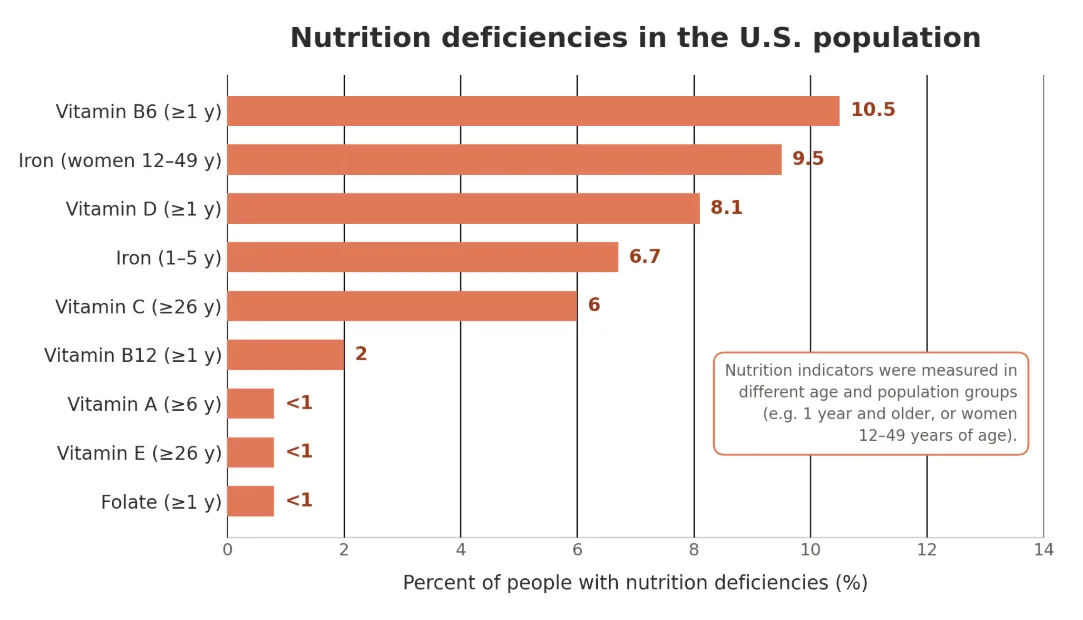
Part of that comes from modern life itself. We travel more, eat out more, sleep less, and spend more time under stress and looking at screens. Many of us are trying to maintain high output across work, training, family, relationships, and everything else life demands.
There's also growing evidence that modern foods can leave meaningful nutritional gaps, even when you're trying to eat well. Some analyses across multiple countries have found declines in nutrients like magnesium, calcium, iron, copper, and zinc in common foods over recent decades, though the real effect is likely more modest than the most alarming headlines suggest.[1]
But interestingly, even that may not be the biggest issue.
Because almost nobody talks about what happens once nutrients are actually inside the body.
The Supplement Industry Was Built Around Simplicity
Most supplements today follow the same basic structure:
Take a serving once a day, every day.

The logic is understandable. Simple routines are easier to remember and easier to stay consistent with.
But human physiology isn't static — so we're really trying to fit a square peg in a round hole.
Some nutrients accumulate over time. Some compete for absorption. Some may become less effective with constant uninterrupted exposure.
Yet most products are still designed as if every nutrient should always be taken together in the exact same way.
This is where we started asking more questions.
Not just:
- “What ingredients should we take?”
- “When should they be taken?”
- “What should or shouldn't be paired together?”
- “Does daily exposure always make sense?”
- “Are there situations where less frequent dosing actually works just as well?”
These questions matter a lot.
Your Nutrients Don't Exist In Isolation
One of the clearest examples is iron and calcium.
Iron absorption depends heavily on a transporter called DMT1. Research has shown that calcium can inhibit this transporter and reduce iron uptake. One study specifically described calcium as a noncompetitive inhibitor of DMT1-mediated iron transport.[2]
A more recent review in Biological Trace Element Research reached a similar conclusion, noting that calcium inhibits iron absorption in a dose-dependent manner.[3]
Read that again for a second.
Two of the most common nutrients people supplement with can directly interfere with each other's absorption when taken together.
And iron and calcium are not the only example.
DMT1 also transports other minerals such as manganese and cobalt, which can competitively inhibit iron uptake as well.[4]
This doesn't mean these nutrients are “bad” together in every context. The body is complex, and many interactions depend on dose, timing, and overall nutritional status.
But it does suggest something important:
Nutrient timing and pairing matter more than most products acknowledge.
The zinc and copper relationship is another example that really changed how we think about supplementation.
Zinc is now included in countless products related to immunity, recovery, testosterone support, and general wellness. And for good reason. Zinc is an essential mineral involved in hundreds of processes in the body.
But zinc and copper also compete for absorption in the gastrointestinal tract because they are both divalent cations. Excessive zinc intake can suppress copper absorption enough to create copper deficiency over time.[5]
According to the Linus Pauling Institute, intakes around 60 mg/day for as little as 10 weeks have produced signs of copper deficiency, while the tolerable upper intake limit for zinc is set at 40 mg/day.[6]
One detail from the literature especially stood out to us: there is often a long delay between symptoms appearing and the issue actually being diagnosed. In some cases, roughly 12 months.[5]
Again, this doesn't mean zinc supplementation is inherently harmful. Far from it.
It simply means that nutrients behave like a system, not isolated ingredients.
And systems require thoughtful design.
Some Compounds May Work Better With Breaks
Adaptogens are one of the clearest examples that the body responds differently to constant exposure over time.
Ashwagandha has become extremely popular for stress support, sleep, and resilience. And among practitioners and experienced users, one protocol comes up again and again:
8 to 12 weeks on
2 to 4 weeks off
In other words, cycling.
Many experienced users don't take them the exact same way forever. Cycling like this is a common practice meant to help maintain effectiveness and avoid adaptation over time.
We think that distinction matters.
Because a static daily formula cannot cycle anything. It assumes your body responds the same way on month six as it did on day one.
But human physiology doesn't really work like that.
The body adapts. Exposure matters. Rhythm matters.
And supplementation protocols should probably reflect that reality.
What A Physiology-First Protocol Actually Looks Like
As we kept studying these patterns, one conclusion became increasingly difficult to ignore:
Most supplement products were designed primarily around convenience and shelf simplicity.
Not around how the body actually absorbs and regulates nutrients.
That doesn't mean modern supplements are useless. We use supplements ourselves and believe they can play an incredibly valuable role in supporting health and performance.
But we do think the next evolution of supplementation will look different.
Less focus on giant static formulas. More focus on:
- Sequencing
- Timing
- Absorption dynamics
- Accumulation
- Cycling
- Intermittent dosing where appropriate
In other words, protocols instead of just products.
That's the philosophy behind M3.
We're not interested in creating the biggest ingredient label possible with trendy ingredients that sell well to those who don't know any better. We're much more interested in designing systems that work with the body and ones based on scientific evidence.
And honestly, we hope this entire category keeps evolving in this direction.
Because the goal should not be building lifelong dependency on increasingly complicated supplement stacks.
The goal should be helping people better support their bodies in a modern environment that often makes optimal nutrition difficult.

Your Body Already Operates In Rhythms
Everything in human physiology follows rhythms.
Sleep. Hormones. Recovery. Stress response. Energy levels.
The body is dynamic by nature.
We think supplementation should reflect that.
That's ultimately why we started M3. We wanted to build something that acknowledges how nutrients are actually absorbed and regulated instead of pretending the body is static.
If this way of thinking resonates with you, we'd love to have you follow along as we continue building M3.
Learn About Max Mend Method →References
- Davis et al. 2004, Journal of the American College of Nutrition — Changes in USDA Food Composition Data for 43 Garden Crops, 1950 to 1999
- PubMed 20152801 — Calcium as a noncompetitive inhibitor of DMT1-mediated iron transport
- Biological Trace Element Research — Calcium inhibits iron absorption in a dose-dependent manner
- American Journal of Physiology — DMT1 transport of manganese and cobalt
- Taylor & Francis — Zinc-induced copper deficiency: delayed diagnosis
- Linus Pauling Institute — Zinc: tolerable upper intake level